
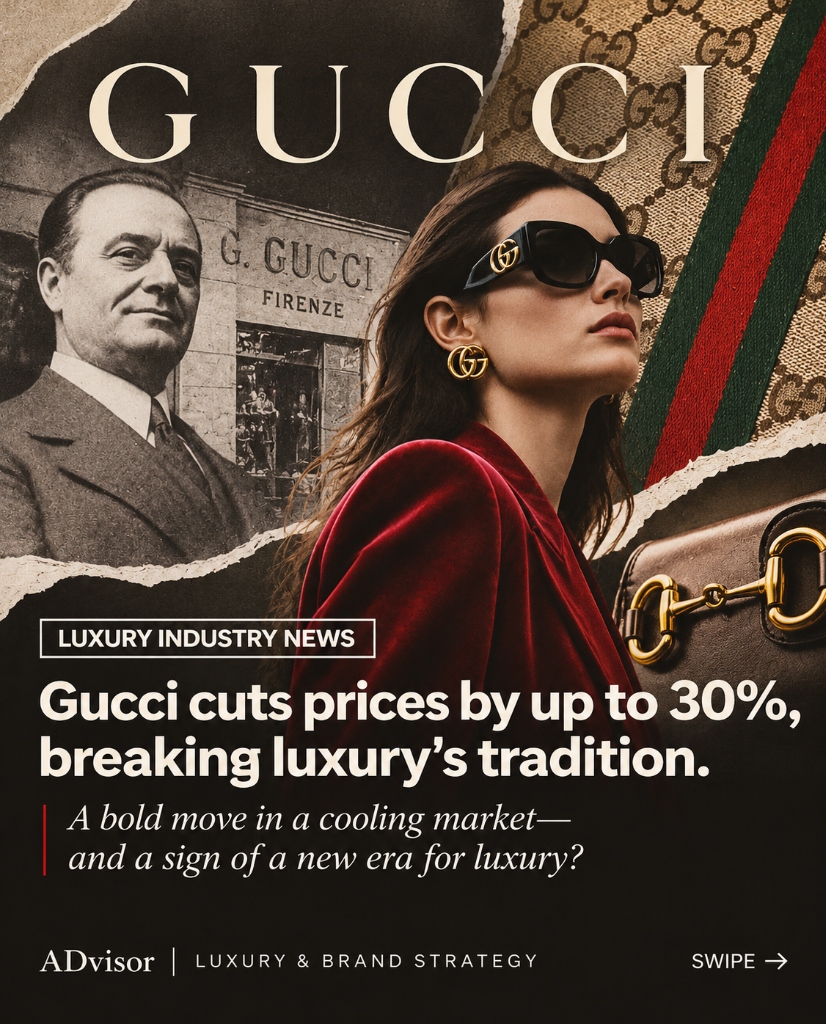
The Price That Changed the Conversation: Padlock Crystal at €2,450
In the quiet corridors of European luxury retail, there is an unwritten, ironclad law that every store director, marketing strategist, and financial analyst learns before anything else: nominal prices in luxury only ever move in one direction.
For decades, that upward trajectory was treated not merely as a commercial pricing policy, but as an article of faith. If a designer handbag cost €1,800 in 2018, it was destined to cost €2,400 by 2021, €3,100 by 2023, and onwards into five figures. The price tag did not merely clear inventory; it served as the brand's cultural moat. It announced to the world that the object inside the tissue paper was immune to ordinary market forces, immune to inflation, and elevated above the grubby logic of supply and demand.
Then, in early 2026, an anomaly surfaced that fractured the industry narrative. Reports verified by luxury market analysts, led by Bernstein's Luca Solca and corroborated by The Wall Street Journal, confirmed that in Paris boutiques, the Padlock Crystal Small Top Handle Bag moved from €3,500 down to €2,450. A single price adjustment of €1,050. A reduction of precisely 30 percent.
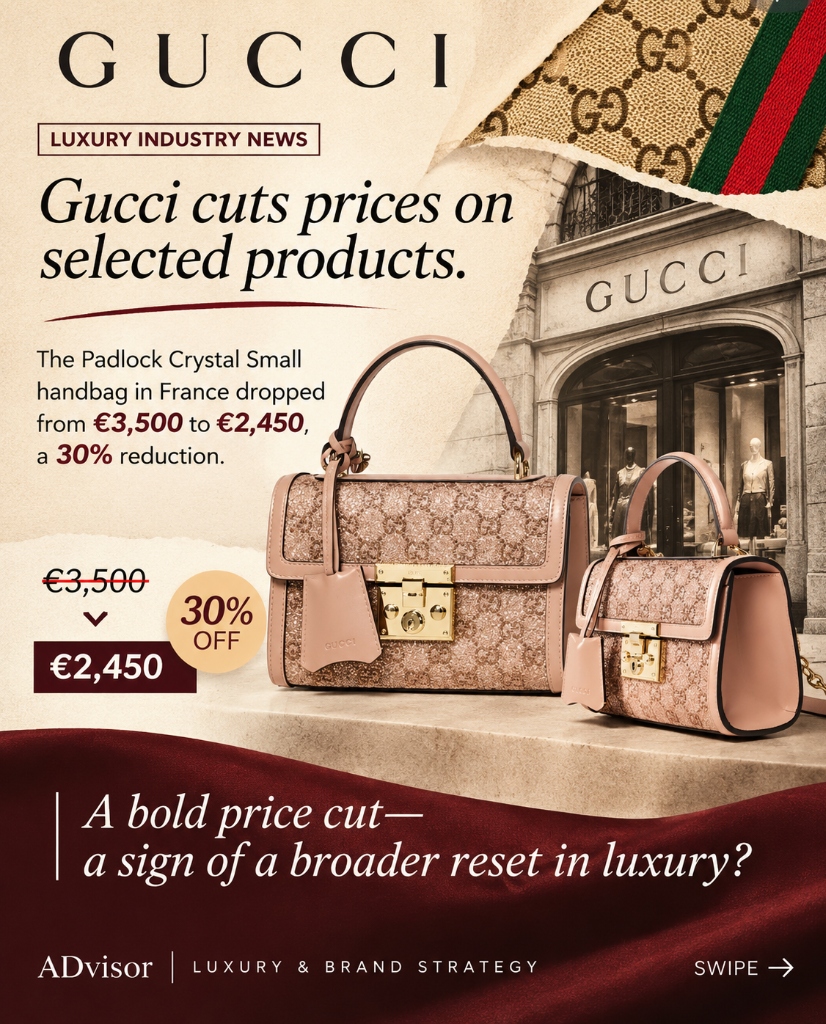
Paris boutique re-tagging of the Padlock Crystal Small handbag from €3,500 to €2,450.
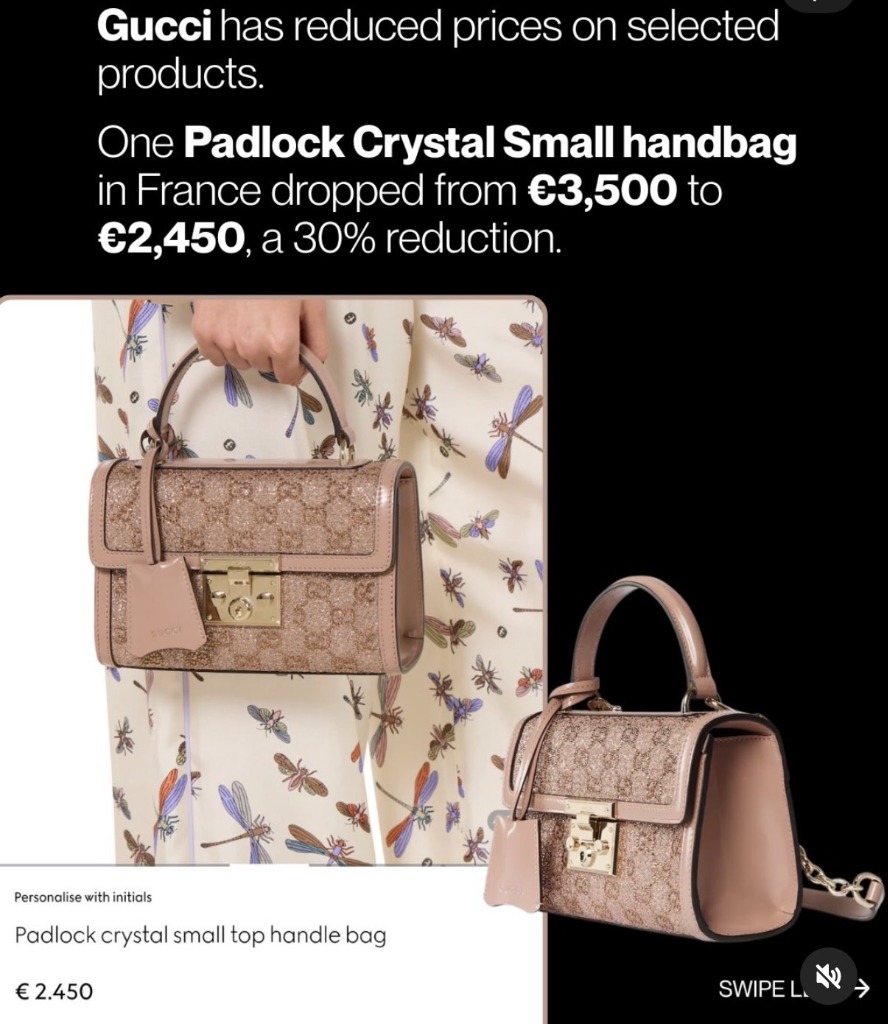
Product-level documentation of the Padlock Crystal Top Handle Bag with dragonfly silk pajama print.
"A luxury bag can become more affordable overnight. But does the customer's perception of its value change at the same speed? Or does a sudden discount simply confirm what the consumer had begun to suspect: that the object was never worth €3,500 in the first place?"
The Central Strategic Tension · ADvisor Editorial Analysis
The €1,050 Padlock Shift: Test Consumer Response
Thirteen Quarters of Decline: Why Price Cannot Substitute for Heat
To understand the Padlock revision, one must place it in the context of Kering's audited financial trajectory. The price adjustment did not occur during a period of market expansion; it followed 13 consecutive quarters of declining sales at Gucci, as rapid price increases made products increasingly difficult for middle-class and aspirational shoppers to justify.
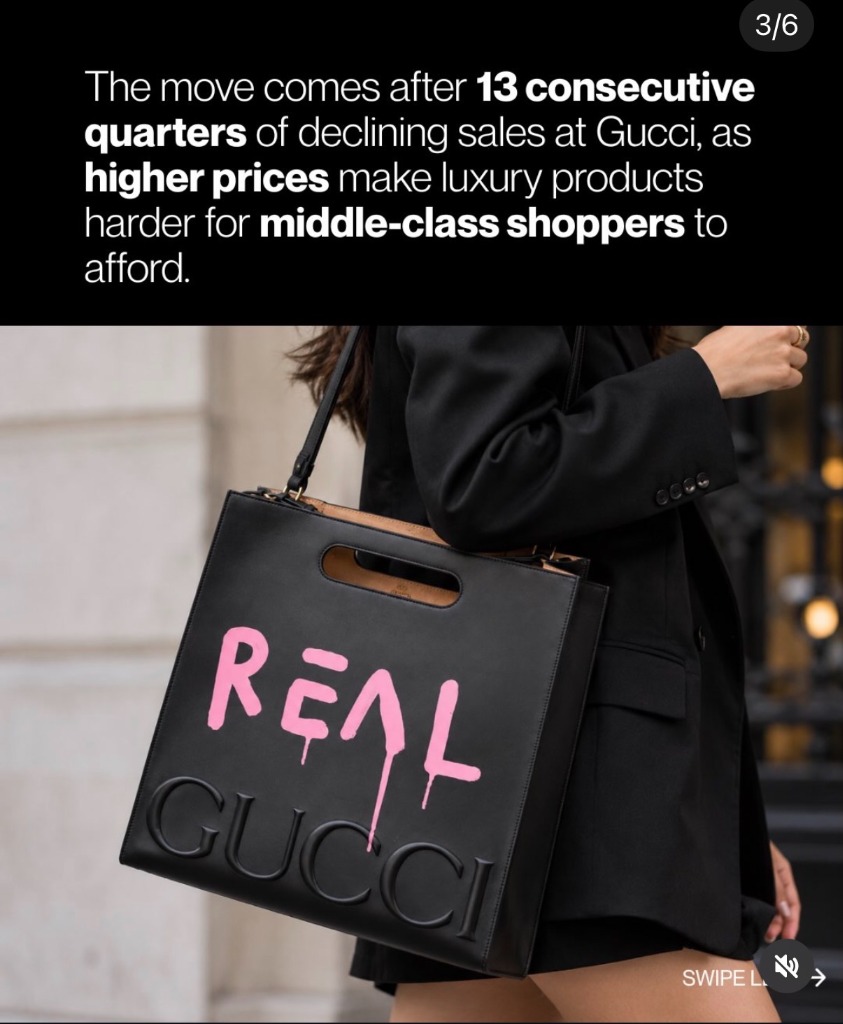
The move follows 13 quarters of sales decline at Gucci, as higher prices alienated the middle-class aspirational customer base that fueled the 2015–2020 boom.
Under Alessandro Michele (2015–2022), Gucci enjoyed extraordinary commercial momentum. In 2015, Gucci generated approximately €3.9 billion. By 2019, revenue had surged past €9.6 billion, driven by maximalist storytelling, vibrant runway theatricality, and a magnetic connection with aspirational Gen Z and millennial consumers. Gucci was not merely luxury; it was pop culture.
| REPORTING ENTITY | REPORTED METRIC | HISTORICAL PEAK (2021/22) | AUDITED LEVEL (FY25 / H1 26) | STRATEGIC STATUS |
|---|---|---|---|---|
| Kering Group | Consolidated Revenue | €20.35 Billion | €14.68 Billion (FY25) | Consolidation Phase |
| Kering Group | Recurring Operating Income | €5.59 Billion (27.5% margin) | €1.63 Billion (11.1% margin) | Profitability Rebuild |
| Gucci Maison | Brand Revenue | €10.48 Billion (FY22) | ~€6.0 Billion (FY25) | ReconKering Reset |
| Gucci Maison | Direct Retail Performance | +15% to +30% Comp. | -9% Direct Retail (Q3 26) | Storefront Rationalisation |
This commercial reality spurred Kering's "Reset, Rebuild, and Reclaim" program (referred to in internal strategy as ReconKering). But as Gucci elevated prices to match the positioning of Chanel and Hermès, a dangerous divergence emerged: prices climbed rapidly while cultural buzz cooled.
Luxury Is Splitting in Two: The 60-Million-Shopper Exodus
The tension at Gucci reflects an industry-wide realignment. The global luxury market is increasingly divided between wealthy connoisseurs who continue spending and middle-class aspirational consumers who have become far more selective.
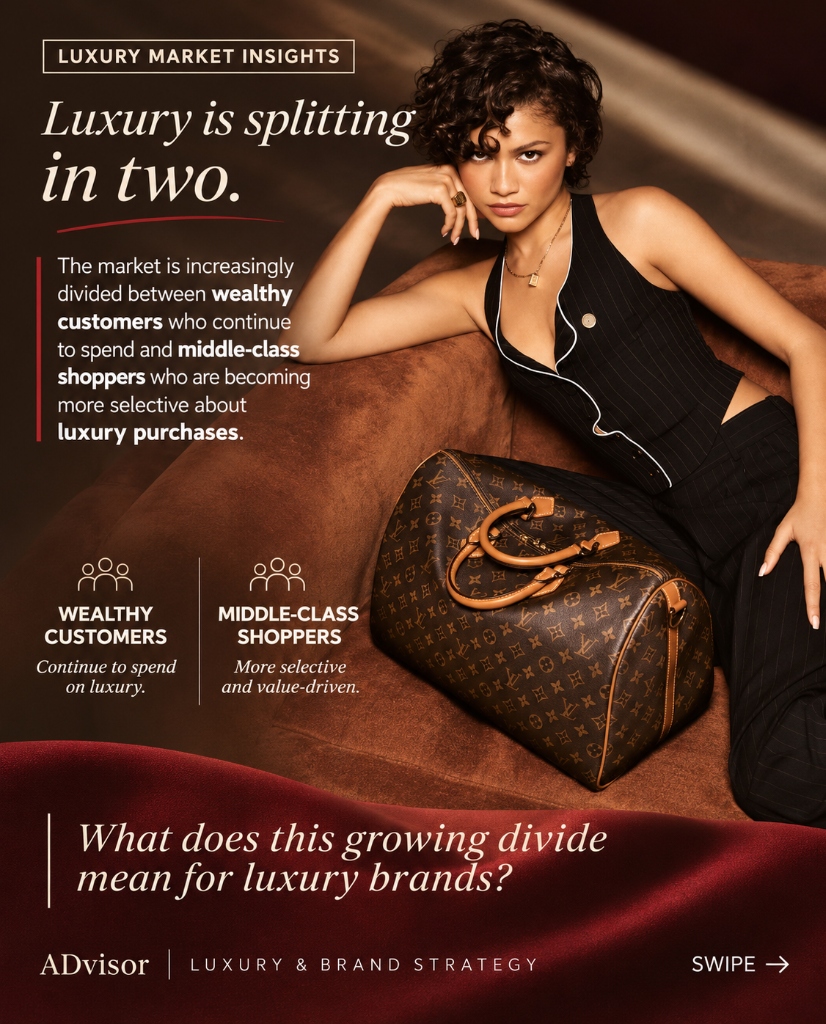
The market is increasingly divided between wealthy customers who continue to spend and middle-class shoppers who are becoming more selective about luxury purchases.
Price increases accounted for more than 80% of total luxury market revenue growth between 2021 and 2024. Growth was driven by extracting more revenue per unit rather than expanding unit volume.
The global luxury consumer base shrank from approximately 400 million in 2022 to 340 million in 2025. Approximately 60 million aspirational shoppers exited the primary luxury market.
Tap to Flip: How Each Segment Responds to Price
Top 1-2% of global wealth. Purchases high jewelry, bespoke tailoring, and limited run leather.
If Gucci discounts the Padlock publicly, this client worries the brand is turning into an outlet label. Demands private salon service and bespoke discretion.
Young professional buying 1-2 pieces yearly to celebrate career milestones or social belonging.
At €3,500, the Padlock felt completely unreachable. At €2,450, it re-enters their savings horizon. However, if perceived as clearance stock, desire collapses.
Active buyer across secondary resale (Vestiaire, The RealReal) or mid-luxury (Polène, Jacquemus).
Asks: "Why pay €2,450 for coated canvas when Polène offers full-grain calfskin for €480?" Compares material craftsmanship over logo prestige.
The Louis Vuitton Doctrine: Why LVMH Refuses to Blink
To understand the stakes of pricing flexibility, look at Louis Vuitton. Both Gucci and Louis Vuitton face a cooling luxury climate. Yet their pricing doctrines diverge fundamentally.
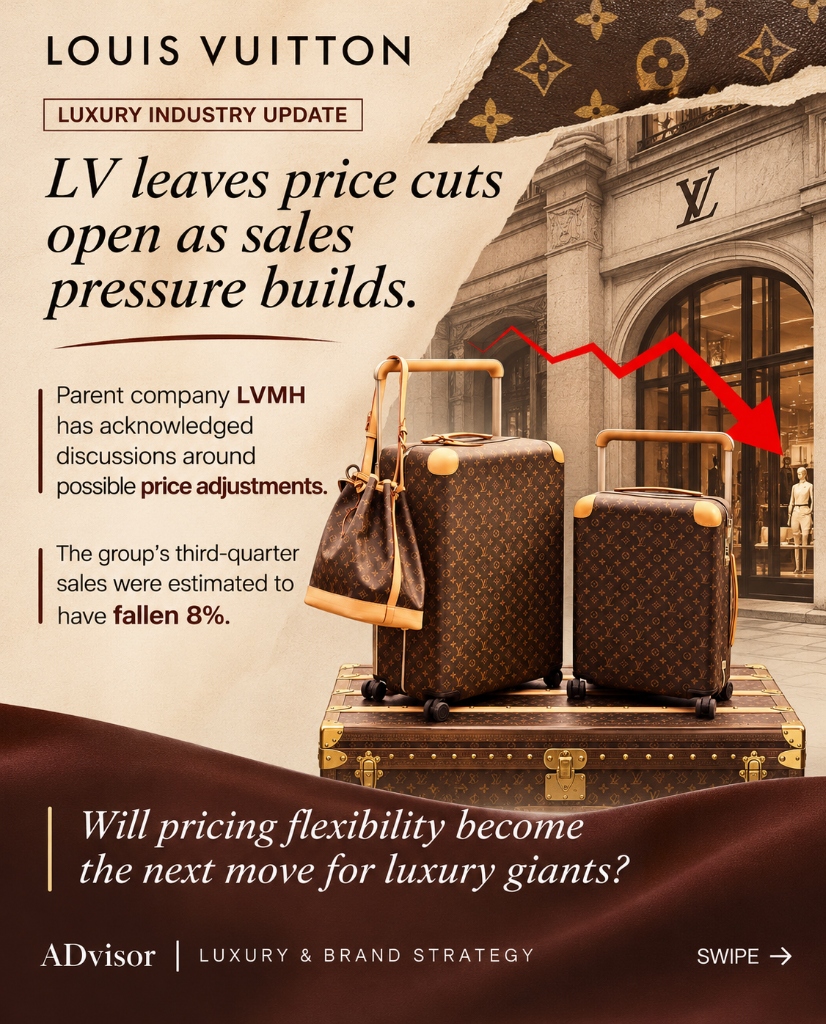
LVMH CFO Cécile Cabanis acknowledged that price cuts had been discussed internally but concluded they were not advisable, defending long-term pricing power.
"Price cuts have been discussed internally, but they were not considered advisable. In luxury, the moment you reduce prices to solve short-term volume pressure, you compromise the pricing integrity built over decades."
Louis Vuitton operates zero outlet stores and never holds public end-of-season sales. Unsold items are systematically repurposed.
The Speedy and Neverfull remain permanent entry anchors, shielding core revenue while high-craft trunk pieces scale into six figures.
Collaborations with Pharrell Williams and global ambassadors sustain cultural heat, preventing the brand from appearing stale.
Fact-Checking the Reset: Inventory Clean-Up vs General Repricing
Did Gucci initiate a global price reduction across its entire collection? The audited corporate record delivers an unequivocal answer: no.
"The price adjustments observed in selected European boutiques applied strictly to a very limited number of older seasonal SKUs from previous collections. This represents targeted inventory clean-up, not a general price repositioning of the Gucci brand."
The distinction is crucial. The Padlock Crystal Small handbag (€3,500 down to €2,450) was a seasonal runway variation embellished with crystals. Core permanent icons like the Gucci Horsebit 1955 and the Jackie 1961 in classic leather retained their premium pricing.
- Gucci Revenue: €1.291 Billion (Down 6% comparable year-on-year)
- Direct Retail: Down 9% comparable (Reflecting footfall rationalisation)
- Wholesale Deliveries: Up 45% comparable (Phasing of early seasonal collections to key partners)
The Exclusivity Paradox: The Four Gates of Luxury
When luxury brands rely solely on financial barriers, they fall into the Exclusivity Paradox: assuming that an escalating price tag creates desirability by itself. In true luxury, financial access is only one of four essential gates.
The monetary threshold that filters purchasing power. Powerful for filtering, but completely hollow if unaccompanied by craft.
Tanned full-grain leathers, hand-stitched saddle seams, hand-polished hardware, and archival longevity.
The codes that signal cultural literacy: the green-red-green web stripe, the bamboo handle, the horsebit clasp.
The personal relationship cultivated in private salon settings, making the client feel recognized, celebrated, and valued.
Three Strategic Prescriptions for Luxury Desirability
Implement a Disciplined Four-Tier Price Architecture
Establish four explicit tiers: Aspirational Gateway (€350–€950: silk scarves, eyewear, small leather goods), Core Iconography (€1,800–€3,200: Horsebit 1955, Bamboo 1947, Jackie), Elevated High-Craft (€3,500–€8,500: exotic leathers, custom hardware), and Haute Horlogerie & High Jewelry (€15,000+: one-of-a-kind bespoke pieces). Protect each tier with strict discounting bans.
Radical Craft Transparency: The Scandicci ArtLab Centerpiece
Consumers will not pay €3,500 for marketing myths. Elevate Gucci's Scandicci ArtLab leather facility into an open public narrative: document the 14 hours of hand-cutting, the edge-dyeing, the Italian saddlery traditions, and hardware metallurgy. Justify every single euro through tangible savoir-faire.
Transition from Transactional Retail to Deep Client Intimacy
Rebalance square footage from crowded sales floors toward private clienteling salons. Empower client advisors with personal styling tools, VIP previews, and private salon appointments that transform retail visits from commercial exchanges into intimate brand experiences.
The Final Verdict: The Difference Between Being Expensive and Being Worth the Price
"Luxury pricing is not simply about how much a maison charges. It communicates what a brand believes its products are worth and what consumers are willing to believe they are worth. Increasing prices can reinforce exclusivity, but price alone cannot create lasting desirability. The difference between being expensive and being worth the price is the entire foundation upon which the future of luxury will be decided."
- Kering S.A. (2026). Q3 2026 Revenue and Operational Telemetry Release. Paris: Kering Corporate Communications.
- Bain & Company & Fondazione Altagamma (2025). Global Luxury Market Study (23rd Edition). Milan: Bain Luxury Practice.
- McKinsey & Company (2025). The State of Fashion: Navigating the Luxury Pricing Recalibration. New York: McKinsey Apparel & Luxury Goods Practice.
- Solca, Luca (2026). Gucci: Assessing Inventory Clean-Up Dynamics and Core Heritage Resiliency. London: Bernstein Autonomous Research.
- Kapferer, Jean-Noël & Bastien, Vincent (2012). The Luxury Strategy: Break the Rules of Marketing to Build Luxury Brands (2nd ed.). London: Kogan Page.