What if the most sophisticated luxury experience is not the one that remembers everything about you, but the one that knows what deserves to be remembered?
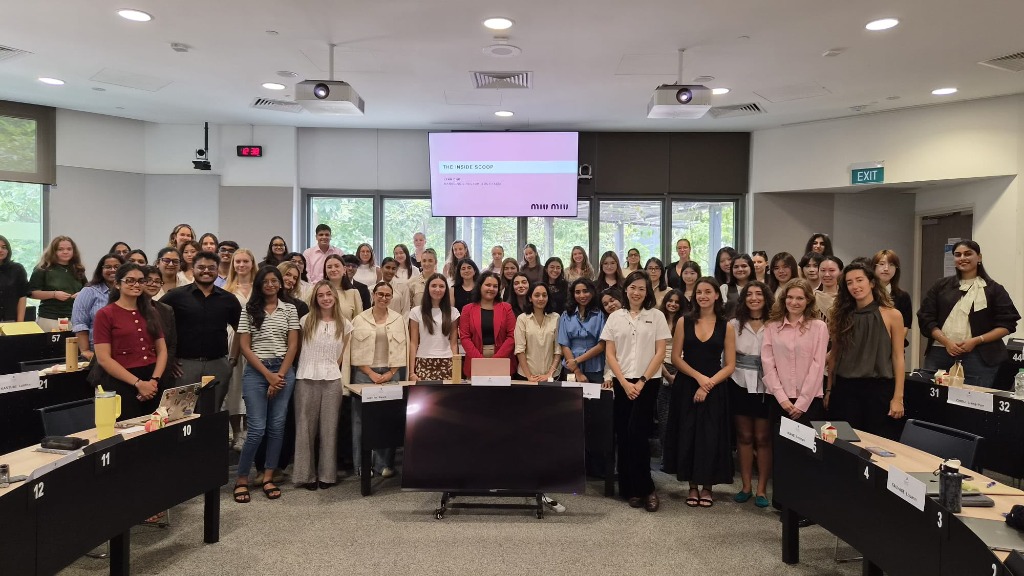
During Johannes Adder's guest session at ESSEC Business School Singapore, one idea stayed with me longer than the others. He described how the most meaningful moments in a client relationship are often quiet: remembering that a client has an important journey coming up, that their son is getting married, that a birthday is approaching. Not a product recommendation. Not a sales trigger. A human detail.
In a world of customer relationship management systems, automated reminders, AI-assisted recommendations and increasingly personalised digital experiences, brands can remember more information than ever. Yet remembering information is not the same thing as understanding a person.
That tension is what made the session interesting to me. Johannes's discussion of small gestures, product knowledge, genuine service and the entire customer journey prompted me to investigate a broader question: How can a luxury Maison scale its business and adopt new technology without losing the sense of personal understanding that makes the experience valuable?
Johannes Adder was introduced during the session as Retail Director for South-East Asia at Van Cleef & Arpels, part of the Richemont group. I was unable to independently verify his exact professional title through publicly available sources, so I present this role as it was introduced during the session.
The Difference Between Knowing a Client and Understanding One
Johannes emphasised that luxury retail is built on relationships and service, rather than treating every interaction as an opportunity to sell. He spoke about understanding the client journey, remembering meaningful personal details, making thoughtful gestures, and maintaining contact in ways that feel relevant to the person's life.
Adapting communications or recommendations to a customer based on available data.
Making the customer feel that the brand understands who they are and what matters to them.
Building trust over time through consistent, appropriate interactions.
Understanding that good service sometimes means not contacting someone.
During the session, Johannes described examples such as a birthday message, a bouquet for a meaningful occasion, or a thoughtful acknowledgement of an upcoming family milestone. A birthday message sent automatically because a CRM system contains a date is not necessarily a meaningful gesture. A well-timed message can feel very different when it reflects an adviser who understands the context of the relationship.
The strategic question is not about better manners. It is: how can a luxury brand become more relevant without becoming intrusive? The answer has implications for client experience, trust, brand perception and the long-term value of the relationship.
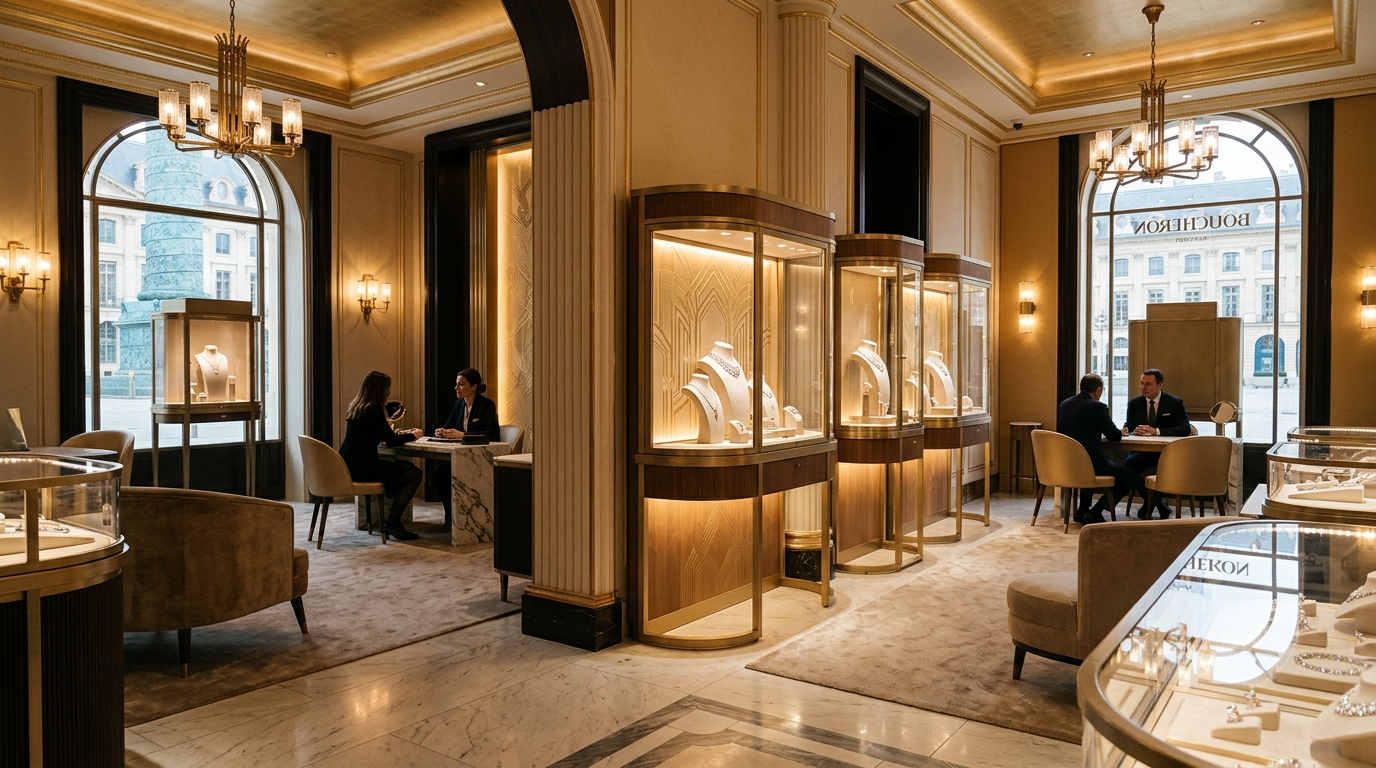
Editorial illustration · Luxury boutique interior, Place Vendôme, Paris
The Paradox of Personalisation: More Communication, Less Recognition
The tension Johannes described is not simply anecdotal. The 11th edition of the True-Luxury Global Consumer Insight study, published jointly by Boston Consulting Group and Altagamma in 2025, identifies a measurable disconnect between what top-tier luxury consumers expect and what brands typically deliver.[1]
of top-tier clients felt overwhelmed by excessive, impersonal communications
brands recognised top clients as high-potential, out of nine purchased regularly
of potential top-tier consumers were not effectively identified by brands
Source: BCG & Altagamma, True-Luxury Global Consumer Insight, 11th edition (2025). These findings describe general luxury market patterns, not Van Cleef & Arpels' specific client base.
The same research found that 80% of top-tier clients expected exclusive and private spaces within boutiques, and that the most valuable segment—defined as spending more than €50,000 annually—represented just 0.1% of luxury consumers numerically but accounted for 37% of market value.[1]
A customer can be known to several luxury brands and receive multiple personalised communications, yet still feel insufficiently recognised. As consumers become more selective, an increase in contact frequency does not automatically improve the quality of a relationship. The competitive opportunity may lie not in communicating more often, but in understanding which interactions add genuine value.
The scarce resource in luxury clienteling may not be client data. It may be the judgement required to use that data appropriately.
My interpretation — not attributed to BCG, Altagamma or the speaker
A Maison Born from a Love Story
Van Cleef & Arpels traces its origin to the 1895 marriage of Estelle Arpels, daughter of a gemstone dealer, and Alfred Van Cleef, son of a stone cutter. The first boutique opened at 22 Place Vendôme in Paris in 1906. The Maison's own account notes that its first piece sold that year was a diamond-set heart—an origin story that begins with love, not commerce.[2]

Editorial illustration · Place Vendôme, Paris — home to Van Cleef & Arpels since 1906
This heritage gives the Maison a distinctive narrative rooted in love, symbolic meaning, craftsmanship and poetry. The history is not merely decorative; it shapes the client experience today.
Marriage of Estelle Arpels and Alfred Van Cleef — the founding love story
First boutique opens at 22 Place Vendôme, Paris. First piece sold: a diamond-set heart
Mystery Set (Serti Mystérieux) technique patented — stones set on invisible rails
First Alhambra long necklace created — the four-leaf clover becomes a symbol of luck
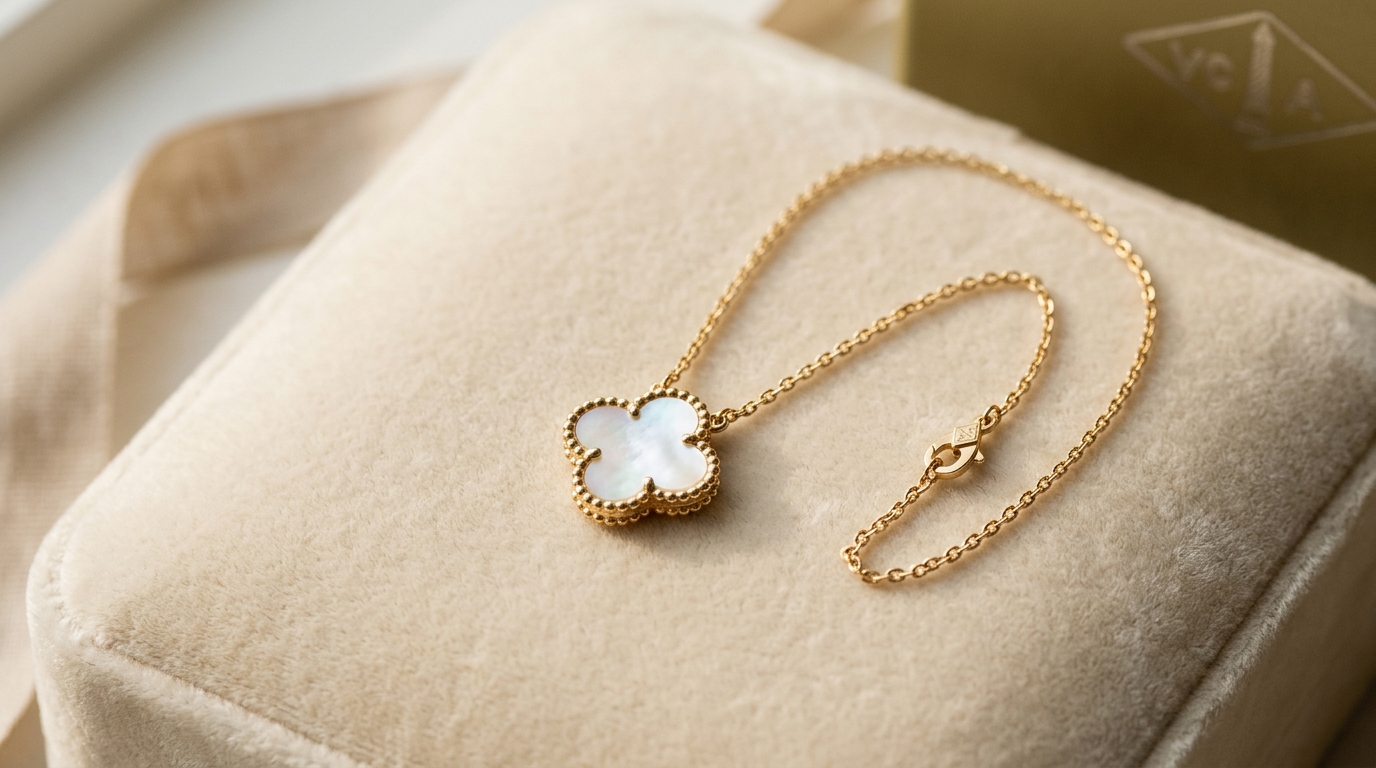
Editorial illustration · The Alhambra motif
The Alhambra: Three Dimensions of Meaning
The Maison states that four-leaf-clover motifs appear in its archives as early as 1906. Its first Alhambra long necklace was created in 1968 and became associated with luck.[3] The Alhambra works on three dimensions:
A distinctive, instantly recognisable design
An enduring association with luck
Different meanings for different people — a new beginning, a milestone, a memory
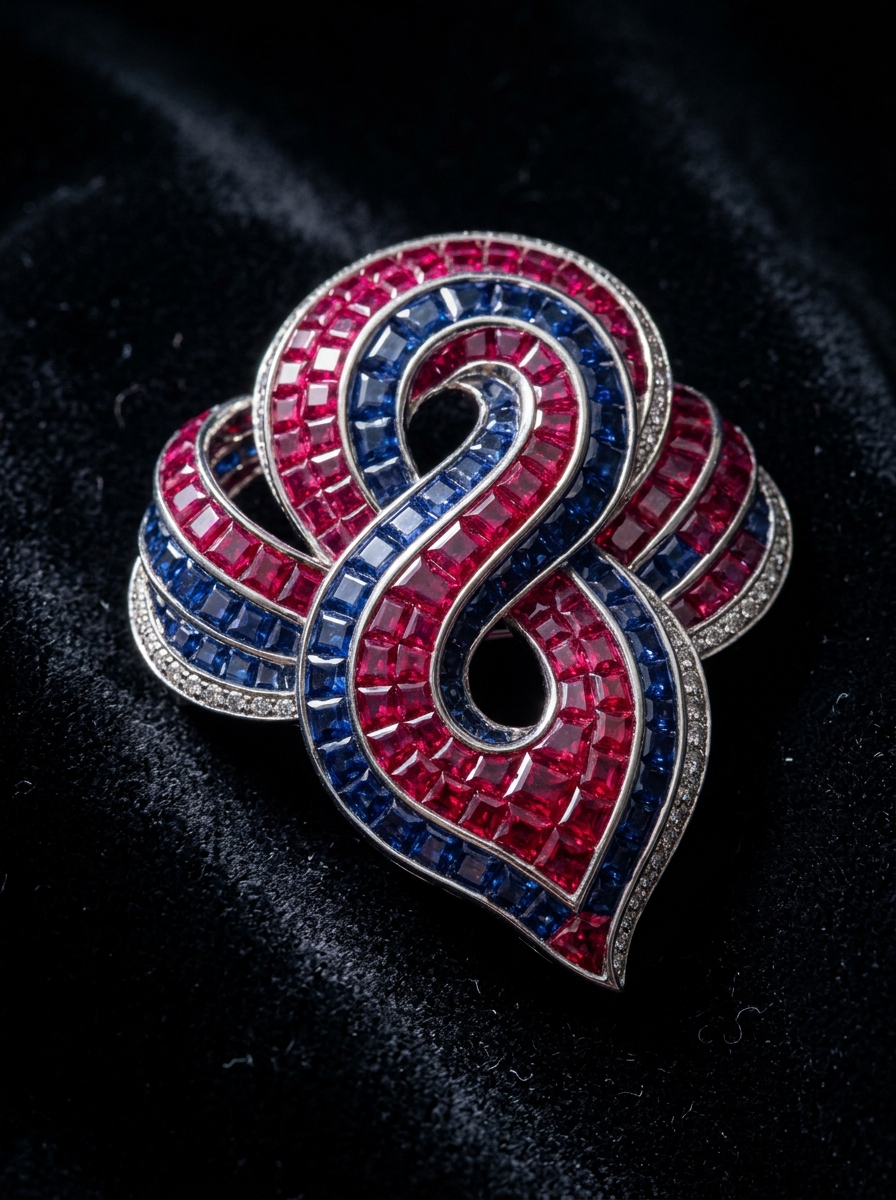
Editorial illustration · Mystery Set technique
Craftsmanship as Substance Behind the Story
The Maison's Mystery Set technique (Serti Mystérieux) was patented in 1933. Precious stones are individually slid onto microscopic gold rails, making no metal prongs visible and creating an unbroken surface of colour. A single clip can require more than 300 hours of work by a jeweller and lapidary.[4]
A skilled adviser does not simply recite the history of a product. They understand enough about the creation to identify which aspects of its story are relevant to the person in front of them.
When AI Becomes the First Luxury Adviser
McKinsey's report "When AI Meets Desire", published in May 2026, examines how AI tools are beginning to mediate discovery, product comparison and early decision-making—sometimes before consumers visit a brand website or boutique.[5]
The research drew on a survey of 300 consumers and 90 merchants. Within the luxury consumer subsample of 31 respondents, 85% used multipurpose AI assistants to support shopping decisions, 74% had used visual search, and 55% had used virtual try-on tools. Given the small subsample, these percentages should be treated as directional findings rather than representative estimates.
Someone searching for a meaningful anniversary gift could ask an AI assistant to explain the symbolism of different jewellery collections, compare materials, investigate craftsmanship and develop an initial shortlist. That journey might begin before the shopper speaks to a boutique adviser.
This is an illustrative scenario, not an actual Van Cleef & Arpels customer journey.
The more important structural shift is this: AI assistants may increasingly shape how consumers discover, interpret and compare products before they enter a brand's own environment. The boutique's role may become more intentional as digital systems handle more research and filtering. The adviser can focus on interpretation, product expertise, reassurance, discretion and confidence at the moment of decision.
Technology can help a brand remember. Human judgement determines what that memory should mean.
My synthesis of the strategic argument — not a quotation from McKinsey or the speaker
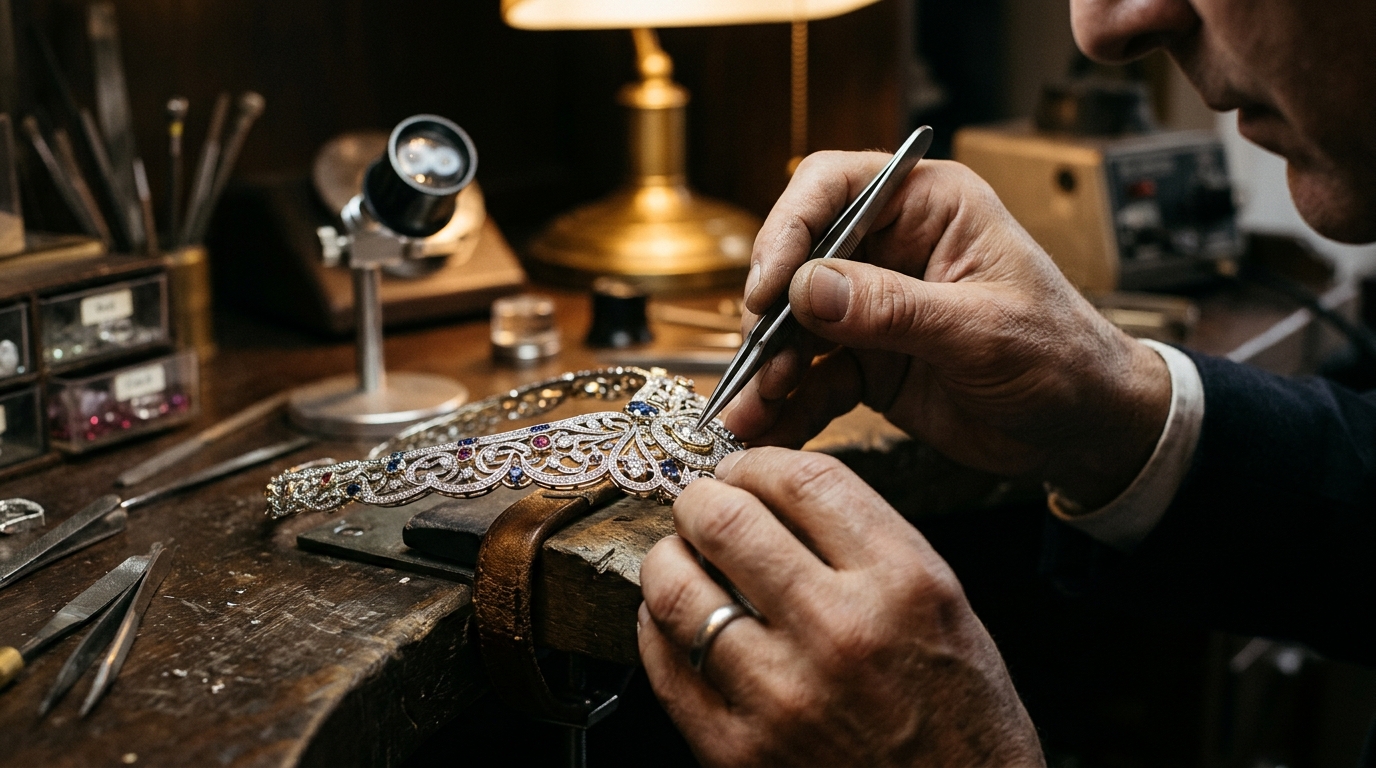
Savoir-Faire: The Intangible Asset No Algorithm Can Replicate
Editorial illustration · High jewelry atelier precision — where artisanal patience and emotional provenance outvalue automated efficiency
One Group, Distinctive Maisons
During the session, Johannes spoke about Richemont respecting the individuality of each Maison rather than treating them as interchangeable brands. Richemont's own published philosophy supports this interpretation: the Group states that its strength comes from the diversity of its arts, cultures, skills and Maisons. Its stated values include collegiality, courage, curiosity, empathy, humility and integrity.[6]
A parent group can provide resources, expertise and long-term support while its individual Maisons preserve their own heritage, creative identity and relationship with clients. This matters because a brand such as Van Cleef & Arpels must continue to express its own poetic and symbolic universe, rather than delivering a generic luxury experience.
Group Sales
Sales Growth (CER)
Jewellery Maisons
Jewellery Growth (CER)
Source: Richemont, Q1 FY2027 press release, 15 July 2026.[7] Jewellery Maisons includes Buccellati, Cartier, Van Cleef & Arpels and Vhernier. These are aggregated group-level figures, not Van Cleef & Arpels' standalone performance. CER = constant exchange rates.
The more sophisticated question is: how does a successful luxury group protect the individuality and intimacy of its Maisons as it grows, digitises and serves an increasingly diverse client base? That balance—between shared group capabilities and individual Maison identity—is central to the challenge of scaling without losing meaning.
From Customer Data to Contextual Understanding
Synthesizing the session and research, I developed a simple framework for thinking about luxury clienteling. This is my own interpretation, not an established Richemont methodology.
Remember
Recognise relevant preferences, previous interactions and details that the client has appropriately shared.
Risk: Collecting data without clarity on how it should be used
Understand
Interpret what that detail means in context, rather than automatically converting it into a sales trigger.
Risk: Treating every life event as a purchase opportunity
Exercise Judgement
Consider the relevance, timing, privacy and appropriateness of reaching out.
Risk: Contacting a client who values being left alone
Add Value
Deliver an interaction that helps the client feel informed, reassured, recognised or cared for—without unnecessary pressure.
Risk: Confusing commercial intent with genuine care
A commercial result and a genuine relationship need not be opposites, provided the interaction creates value for the client rather than relying on pressure. Luxury retail remains a commercial activity, but effective clienteling should support a sustainable business relationship.
The future of clienteling is not maximum personalisation. It is relevant personalisation, delivered with discretion.
The Boutique Is a Place of Interpretation, Not Just Presentation
During the session, Johannes discussed the importance of learning the product category deeply, understanding the customer journey, communicating with clients, developing industry knowledge, asking for conversations and coffee meetings, handling rejection, and being confident without becoming arrogant. He also shared his own professional transition, having moved from the automotive industry into luxury fashion and boutique management before his role at Van Cleef & Arpels.

Johannes Adder
Introduced as Retail Director, South-East Asia
Van Cleef & Arpels · Richemont Group
Guest Session · ESSEC Business School Singapore · October 2026
His advice was practical. A person who wants to enter jewellery needs to develop knowledge of gemstones, gemmology, setting techniques, materials, heritage and collections. Product knowledge is not merely information to repeat. It gives the adviser credibility and allows them to have richer conversations without reducing every interaction to a product pitch.
The same principle applies to careers. Rather than approaching a luxury company with a generic statement of passion, a candidate should demonstrate:
An understanding of the Maison's heritage and identity
Knowledge of the category and its clients
Evidence of the value they can contribute
Curiosity about the business beyond its visual image
Confidence, humility and willingness to learn
These qualities connect directly to Richemont's stated values of curiosity, empathy, humility, courage, collegiality and integrity.[6]
The Luxury of Making Someone Feel Understood
The session changed the way I think about luxury retail. The lesson is not that small gestures are more important than products, that service alone creates loyalty, or that technology has no place in luxury. Instead, it is that product excellence, heritage, service, technology and personal relationships need to work together.
A creation can carry decades of design history and exceptional craftsmanship, but the adviser still has to make that world understandable and relevant to a particular person.
A CRM system can preserve information, but the adviser must decide how to use it appropriately.
A digital experience can make discovery easier, but human expertise provides context, confidence and reassurance when the decision matters.
A group can create shared capabilities, while each Maison expresses its own identity.
A luxury relationship becomes meaningful when the brand can connect what it knows about its creations with what it understands about the person experiencing them.
I thank Johannes Adder for sharing his perspective during our ESSEC session. His discussion connected the everyday realities of luxury retail to the larger questions about heritage, technology and human relationships that I am exploring in my studies. This article represents my attempt to investigate those questions further, connecting firsthand learning with independent research and my own developing strategic interpretation.
References
- [1] Boston Consulting Group & Altagamma, True-Luxury Global Consumer Insight, 11th edition, 2025. altagamma.it
- [2] Van Cleef & Arpels, "Love Stories at Van Cleef & Arpels." vancleefarpels.com
- [3] Van Cleef & Arpels, "History of the Alhambra Collection." vancleefarpels.com
- [4] Van Cleef & Arpels, "The Mystery Set." vancleefarpels.com
- [5] McKinsey & Company, "When AI Meets Desire: Innovating Human-Centered Luxury Experiences in the Agentic Age," 29 May 2026. mckinsey.com. Note: the luxury consumer subsample comprised 31 respondents; reported luxury-specific percentages are directional findings.
- [6] Richemont, "Ambition & Values." richemont.com
- [7] Richemont, "Richemont posts strong start to the year with sales up by 20% at constant rates for its first quarter ended 30 June 2026," 15 July 2026. richemont.com